

Download press release”“APOC is investing in young assets for exchange and lease as our comprehensive LDG portfolio expands to include new engine option fleets.”
Karolis JurkevičiusVP Landing Gear & Major Assets, APOC Aviation
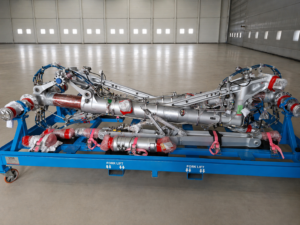
The Netherlands, April 28, 2026: APOC Aviation, a trading and leasing specialist for landing gear, engines and aircraft parts, has acquired a ‘zero-cycles-since-new’ SAFRAN landing gear for the A321 EV. Compatible with the Airbus new engine option (NEO) fleet, it reinforces APOC’s strong position as one of Europe’s leading independent providers of landing gear for operators facing imminent overhauls, AOGs or other operational requirements.
Karolis Jurkevičius, VP Landing Gear & Major Assets at APOC states, “We’re focused on growing our portfolio and have tripled our landing gear assets in the last 12 months extending our widebody capability by adding multiple A330 ENH and B777-300 ER sets. Our strategy is to secure young assets to strengthen our market position and meet operator demand, which is continuing to grow. The lead time for new assets of this type currently stands at 120+ days.”
Whilst APOC is continually renewing its new/young LDG portfolio as assets are leased or exchanged, it also holds a significant range of narrowbody landing gear which caters for the ageing global fleet. “We have availability of A321 CEO and A320 LDGs which demonstrates our broad portfolio,” says Kurkevičius. “A mixed asset base that includes both older CEO (Current Engine Option) aircraft and newer NEO (New Engine Option) aircraft is important, especially for leasing or exchange programmes. The value comes from diversification, flexibility, and lifecycle coverage.”
APOC’s over-riding aim is to future-proof their portfolio and complement their ever-expanding widebody asset base. CEO fleets will gradually phase out—but not quickly – and NEO fleets are expanding globally. CEO assets serve airlines operating older fleets which is still a huge global base, especially in emerging markets and low-cost carriers. The NEO assets are targeting newer fleets with operators focused on fuel efficiency and longer-term fleet strategies.
Jurkevičius explains, “We can serve both legacy and next-gen operators. Currently there is higher demand for MRO (maintenance, repair, overhaul) and exchanges necessitating more frequent shop visits. Newer NEO landing gear may be lower maintenance now, but long-term leases and the future overhaul pipeline present consistent opportunities.”
A diverse landing gear pool enables APOC to provide stronger exchange flexibility and faster turnaround for operators needing immediate replacements. Better OEM & MRO relationships support widebody and narrowbody assets across generational types and position APOC as a full-spectrum partner for airlines and MROs. This increases negotiating power for repair and overhaul with shops and OEMs which delivers cost benefits that APOC passes on to customers.